Can Customer Ratings Be Discrimination Amplifiers? Evidence From a Gig Economy Platform
Management Science, forthcomingPreprint
Because displayed customer ratings embed the evaluations of biased customers, they act as discrimination amplifiers: passing bias on to otherwise unbiased customers and widening the rating and earnings gaps faced by minority workers.
Winner, Best DEIJ Paper, INFORMS, 2023
Abstract
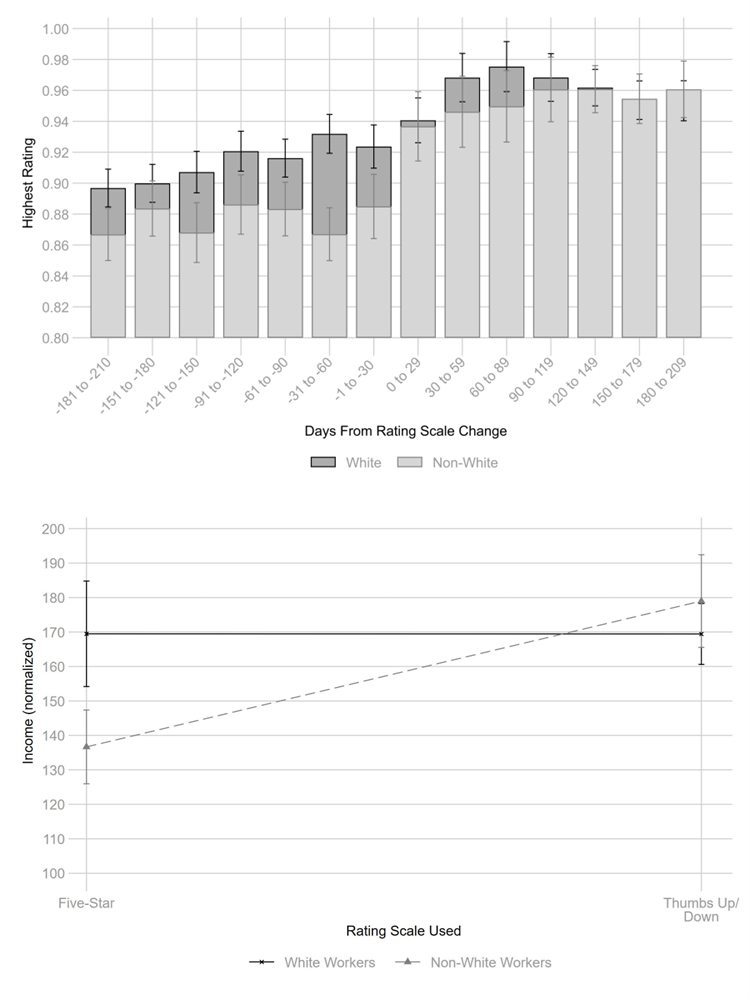
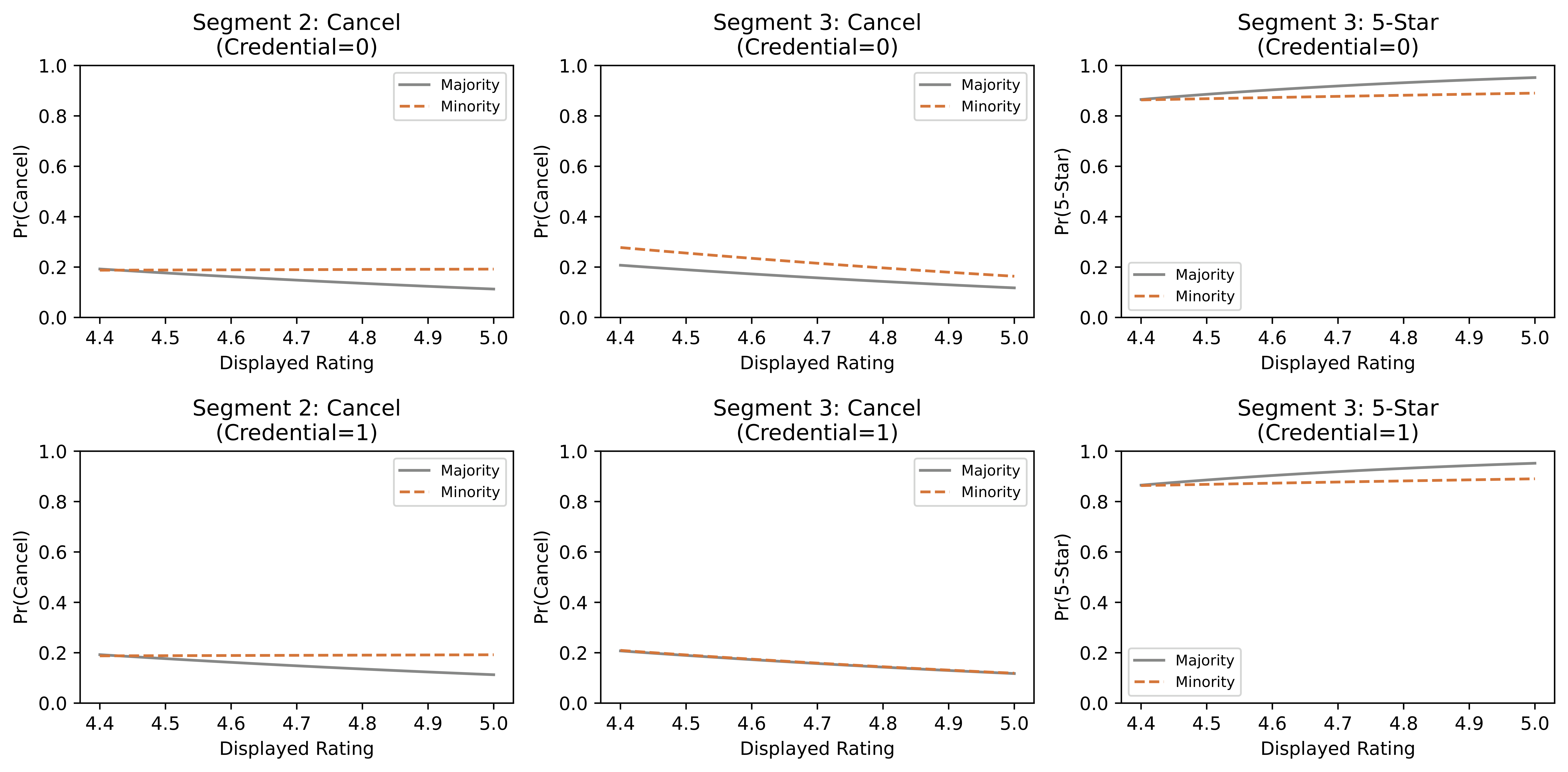
This paper investigates whether rating systems generate discriminatory spillovers and act as “discrimination amplifiers.” When platforms display aggregated customer ratings, these “quality metrics” also serve as anchors for future evaluations. Because they embed ratings from biased customers, displayed averages memorialize past discrimination, transmitting it to otherwise unbiased customers and amplifying bias among discriminatory ones. We formalize this mechanism using a stylized analytical model and test it with data from an online labor platform. Allowing for unobserved heterogeneity, we identify three customer segments: a neutral segment, and two biased segments, one that cancels more minority-accepted jobs and another that both cancels more and rates minorities lower. All segments are impacted strongly by displayed ratings. Customer discrimination generates a rating gap of 5.2% and an earnings gap of 36.1% between minority and majority workers. Notably, the unbiased segment produces discriminatory outcomes through spillovers. Adjusting displayed ratings reduces the gaps by mitigating the spillovers to the unbiased segment and amplification of the biased segment, but aggregate rating and earnings disparities persist because biased segments constitute a large share of the market.